(ESRS E5-1, E5-3, E5-4)
R&D AND INNOVATION

At Akçansa, through our R&D and innovation activities, we aim to reduce our environmental impact and contribute to both our company and the sector.
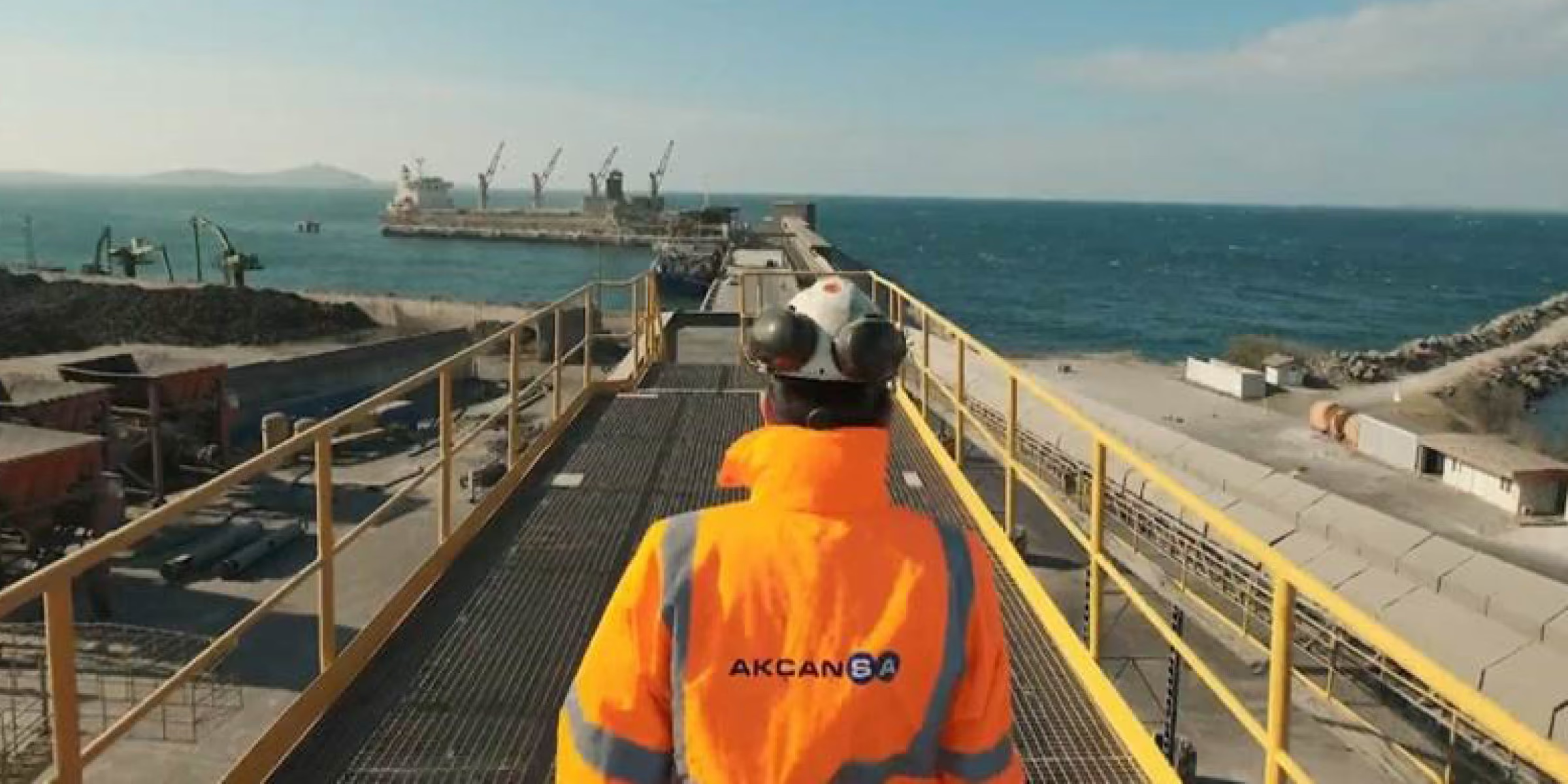
At Akçansa, through our R&D and innovation activities, we aim to reduce our environmental impact by integrating advanced technologies into our production systems and to create value for both our company and the sector through our “growing together” approach. By taking customer demands and market expectations into account, we optimize our business processes and develop innovative, value-added products without compromising production and quality standards.
Akçansa carries out activities such as new product development, product optimization studies, pre- and post-sales technical support, training programs, lectures and seminars on cement and concrete technologies at universities, technical field trips for university students, support for academic research on cement and concrete, and national and international scientific publications. These activities are conducted in collaboration with universities, public institutions, sectoral NGOs, and the Global R&D unit of Heidelberg Materials.
Among the key R&D activities we have recently completed are studies on the application of carbon capture, utilization and storage (CCUS) technologies in building materials, the prediction of quality control parameters in cement and concrete production through advanced data analytics, and the assessment of the usability of construction and demolition waste in concrete production and construction applications. In addition, several R&D projects are currently ongoing. These include research on the use of alternative mineral additives and low-carbon production technologies in cement and concrete production, the observation of the upcycling of construction and demolition waste as a carbon-sequestering material for use in cement and concrete production, and the investigation of the feasibility of using hydrogen and oxygen in the fuel mix.
Our key R&D achievements in 2025 include the completion of artificial intelligence model updates for the autonomous production system at our Çanakkale and Ladik cement plants. At our Çanakkale plant, improvements made to the No. 1 rotary kiln cooling unit increased the operational rate of the autonomous system by 24%, while the waste disposal process in the rotary kiln unit at our Samsun plant was integrated into the artificial intelligence control system. These improvements contributed to increased heat recovery and energy efficiency, supporting our sustainability and operational excellence objectives.
An Important Initiative for a Green Future: ‘Sustainable Product Movement’
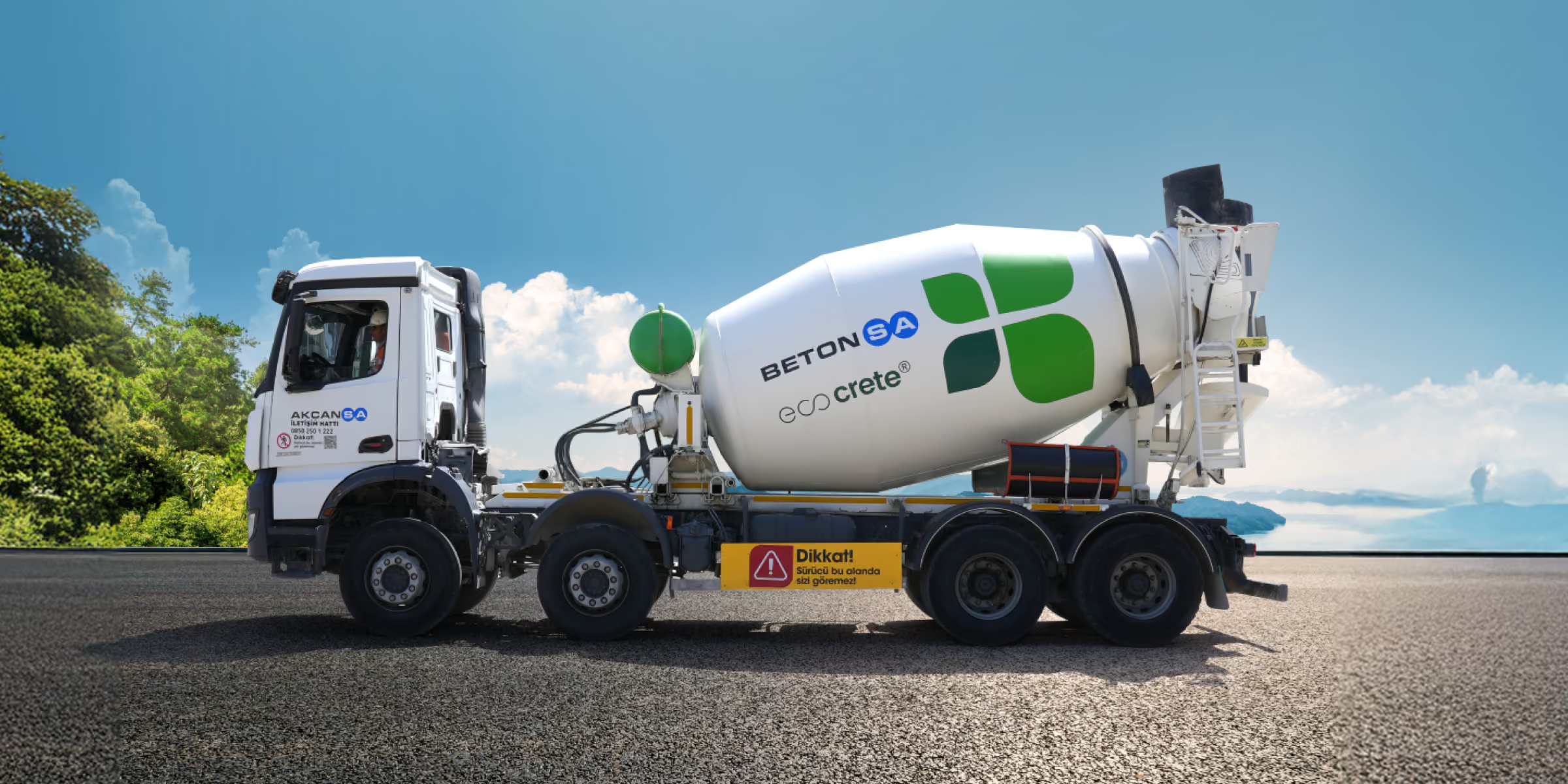
As Akçansa, we support our responsible approach aligned with our climate targets through the sustainable product movement initiative. Under this new initiative announced with the ‘Green Formulation’ concept, we have grouped our sustainable cement products, where respect for climate and the environment is combined with performance, under ‘Green for Cement’, and our low-carbon sustainable ready-mixed concrete products under ‘Green for Concrete’. Under the “Green for Cement” category, the low-carbon ‘Actioncem’, the environmentally resistant ‘Solidcem’, and the high-strength and durable ‘Duocem’ are positioned as sustainable cement product categories. Under the “Green for Concrete” category, the new-generation ready-mixed concrete product category ‘Ecocrete’ is presented, targeting the lowest possible carbon footprint through the use of sustainable technologies.
In 2025, the share of revenue generated from sustainable products was approximately 19% for cement products and around 40% for ready-mixed concrete products. In achieving this target, sustainable alternatives were offered for each existing product by taking our customers’ needs and expectations into account, while optimization was carried out without compromising the core performance parameters of production and quality.
As Akçansa, we entered into a 10-year strategic partnership with Akademi Çevre, a company operating in the fields of recycling and environmental management, for the establishment of a Refuse-Derived Fuel (RDF) facility with an annual capacity of 60,000 tons. Through the fuel to be produced, 130,000 tons of carbon dioxide emissions savings are targeted.
Within the scope of the Calcined Clay Pilot Trials, experimental studies were conducted at our Ladik and Çanakkale plants. Successful results were achieved in calcination trials carried out at the Ladik plant with 7% clay feeding during the clinker cooling stage. Based on this project concept, an application was submitted to the TÜBİTAK TYSP 1832 support program, and the project was accepted. With this project commissioned in December 2025, annual CO2 savings of 20,000 tons are targeted.
We also develop advanced technology R&D projects that will support our long-term net-zero target. One of these projects is the Construction and Demolition Waste (CDW) Recovery through CO2 Utilization project, “CIRCULATE”. The project was selected among the first 10 projects from Türkiye accepted into the CFA (Climate Finance Acceleration) Program supported by the UK Government, and it successfully completed the program. Due to the significant potential for construction and demolition waste arising from urban transformation in Istanbul, the project is planned to be implemented primarily in Istanbul.
The project is planned to be implemented in two phases. In the first phase, the installation of pre-separation and basic recycling units is targeted. Through this, it is projected that approximately 1 million tons of recycled products per year will be produced (RCA – recycled concrete aggregate, RS – recycled sand, RCF – recycled concrete fines). In Phase 2, an advanced recycling unit will be established to separate recycled concrete paste (RCP) from CDW, and this RCP will be utilized as a carbon utilization material through the carbonation (mineralization) process; the CO2 captured from the flue gas of the Büyükçekmece Plant is planned to be used directly in the carbonation of RCP. The technical and financial feasibility studies for the project have been completed by Türkiye Technology Development Foundation (TTGV) and Akçansa with consultancy support from Özyeğin University.
Within the scope of this project, 20,000 tons of CO2 per year will be utilized, and by replacing clinker with carbonated RCP (cRCP), 120,000 tons of CO2 will be saved, resulting in a total annual saving of 140,000 tons of CO2.
Hydrogen is another strategic focus area in Akçansa’s carbon reduction efforts. In this context, work is ongoing on the Green Methanol Production Project at the Çanakkale Plant within the framework of the HYSouthMarmara Hydrogen Valley (supported by the EU with a €7.5 million grant under the Clean Hydrogen Partnership 2022 call) and the South Marmara Hydrogen Coast Platform projects. We carry out this project together with academics from Turkish-German University and receive support from experts and officials of GMKA (South Marmara Development Agency).
In general terms, the project aims to produce green hydrogen through electrolysis using seawater or wastewater, and to produce green methanol in a reactor with the CO2 from cement plant flue gas. Under this project, the annual production target is 50,000 tons of green methanol. To achieve this, approximately 70,000 tons of CO2 will be utilized annually, and 9,400 tons of H2 will be required.
Innovation Activities
To keep the innovation culture continuously active by integrating it into our corporate strategies, enhance the innovation capabilities of the company and our employees, increase maturity in innovation management, and implement value-creating innovative approaches, we launched İnovasyol, our internal entrepreneurship and innovation program, three years ago. To date, under İnovasyol, 35 ideas and 8 projects, developed by 30 internal entrepreneurs, have contributed to shaping Akçansa’s future.
In 2025, a call for ideas was announced for the third round of the İnovasyol initiative, which will continue in 2026. Prior to the development of projects in the focus areas defined in our strategic roadmap, we as Akçansa employees came together in a knowledge-sharing session and entrepreneurship training, where past participants shared their experiences to inspire new ideas.
In the upcoming rounds of the İnovasyol initiative, we will continue to collect new ideas, prioritize and implement promising ones, and reward them.
TL 49.9 million
Total R&D Expenditures*
TL 5.3 billion
Sustainable products and services revenues
24
Number of sustainable products and services
22%
Share of sustainable products and services in total revenue
100%
Share of sustainability-focused R&D and innovation investments in total R&D and innovation investments
2
New trademarks registered
56
Total number of registrations