

(ESRS E4, E4-1, E4-2, BP-2)
BIODIVERSITY AND LAND USE MANAGEMENT APPROACH AND STRATEGIC FRAMEWORK

As Akçansa, we continue to uphold our commitment not to open new sites or conduct exploration activities in World Heritage areas or in regions with high conservation status defined under IUCN Categories I and III.
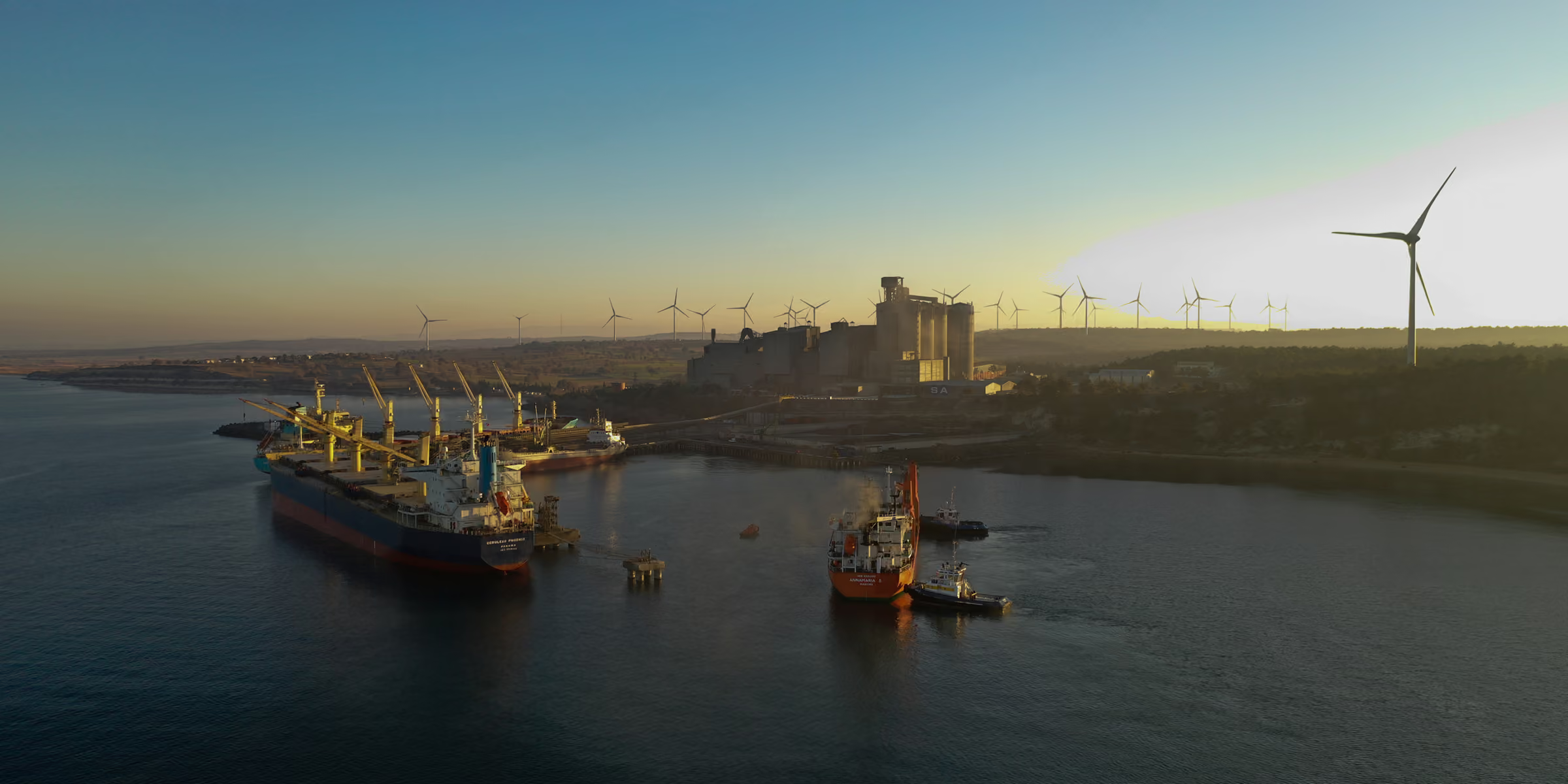
As Akçansa, we consider reducing the impacts of our activities on biodiversity and ecosystem integrity as a corporate priority and carry out our work in line with a strategy aligned with the United Nations Sustainable Development Goals and the Kunming–Montreal Global Biodiversity Framework. Within this framework, we aim to manage all our operations through a nature-positive approach.
Across all our existing and potential operational areas, we conduct science-based assessments that consider regional ecological conditions in addition to legal requirements and develop site-specific conservation practices. Our Biodiversity Policy is governed at the highest level by the Board of Directors and the Sustainability Committee, while performance and progress are monitored by the Sustainability Executive Committee chaired by the CEO.
As Akçansa, we continue to uphold our commitment not to open new sites or conduct exploration activities in World Heritage areas or in regions with high conservation status defined under IUCN Categories I and III.
You can access our Biodiversity Policy here.
Biodiversity Management Plans and Roadmap
In 2024, we published our Biodiversity Policy across the company. As part of the Biodiversity Management Plan (BMP) development process for our mining sites, which we initiated in 2023, we completed two BMP studies covering areas that include eight mining license sites in two regions in Çanakkale, identified among our priority locations. In line with our 2030 strategy, we aim to prepare and implement Biodiversity Management Plans at all mining sites where we operate.
Impact, Risk, and Opportunity Analysis on Biodiversity
Sectoral Impact Profile
Due to the nature of its operations, the cement sector has direct impacts on biodiversity, including land use, habitat loss, and the disruption of ecosystem integrity. Mining activities carried out during raw material extraction may lead to long-term physical changes in soil and vegetation, while emissions generated during production processes may have significant effects on air quality and ecosystem health. For this reason, closely monitoring sectoral impacts, assessing risks, and developing strategic practices aimed at mitigating these impacts are of critical importance for sustainable operational management.
Impact Analyses
To comprehensively evaluate our impacts on biodiversity at the sites where we operate, we conducted ecological analyses with independent consultancy organizations. The following factors were taken into consideration in these analyses:
Direct impacts on ecosystems
Proximity to water resources
Emission levels
Regional ecological sensitivity
Habitat integrity
As a result of these studies, we identified priority biodiversity areas for Akçansa and established the foundational framework for our management plans.
Sensitive Areas and Prioritization Approach
Through prioritization studies conducted based on ecological risk levels and sectoral impact criteria, we identified five priority locations. These sites have been classified as areas with high ecological sensitivity and a significant potential for environmental impacts.
The main criteria used in the prioritization process are as follows:
Ecological sensitivity of the land and its conservation status
Potential for habitat loss
Intensity of water and other natural resource use
Impacts of emission releases on ecosystems and air quality
This approach supports the effective management of risks, the identification of priority focus areas, and the strengthening of our biodiversity strategy.
Rehabilitation, Restoration, and Nature Reclamation Activities
As a result of our mining activities, desertification does not occur; however, limited land degradation may take place. To mitigate these impacts, we continue to carry out comprehensive rehabilitation activities.
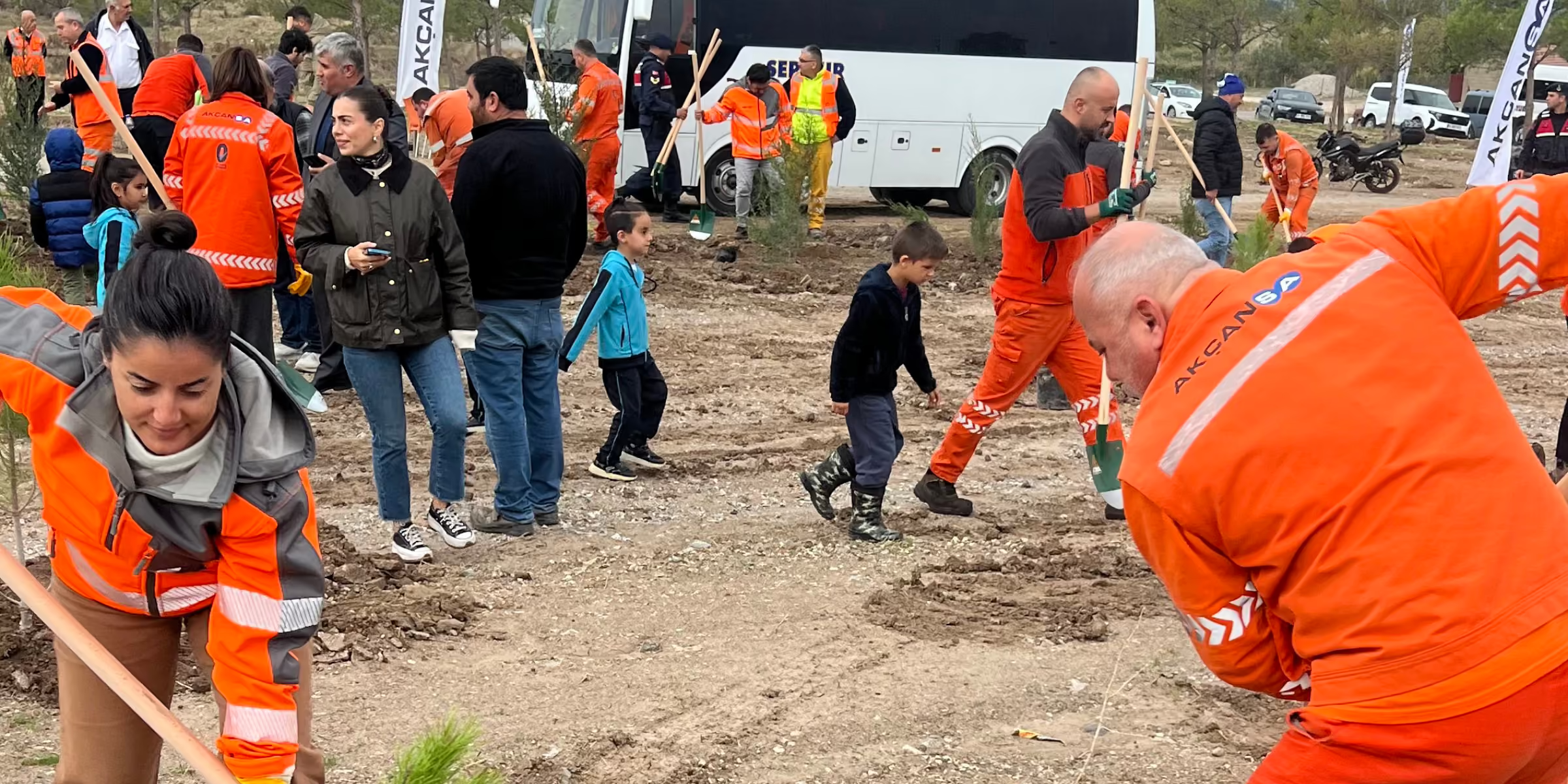
In 2025, we completed the rehabilitation of 1,500 m3 of land, bringing the total rehabilitated area to 29.15 hectares. By 2030, we aim to restore 50 hectares of land to nature. In areas classified as forest land, once reserves are depleted, we conduct regular afforestation activities each year and gradually restore sites to their pre-operational ecological condition. In 2025, we planted 750 trees in quarry and surrounding areas in Samsun - Ladik, and 1,000 trees in two nearby villages in Çanakkale - Ezine.
Quarry Life Award (QLA) – Collaboration with Educational Institutions, NGOs, and Industry
During the 2024–2025 period, the Türkiye leg of the international Quarry Life Award (Biodiversity Project Competition), organized globally by one of our main shareholders Heidelberg Materials, was organized by Akçansa. Through this initiative, we achieved significant project outcomes in collaboration with educational institutions, academics, and civil society organizations.
13 project proposals were received for five mining sites located in Istanbul, Çanakkale, and Samsun.
Projects were evaluated based on criteria such as methodology, innovation, feasibility, stakeholder engagement, and scientific and social impact.
Six projects advanced to the final stage, and following pilot implementations conducted in 2025 and the submission of final reports, four projects were awarded a total of €10,000 based on the jury’s evaluation.
In addition, during the Quarry Life Award global stage held in Germany by Heidelberg Materials, one project from Türkiye supported by Akçansa was selected as a finalist. These processes contribute to the development of innovative biodiversity solutions and the strengthening of academic collaborations.
Metrics, Indicators, and 2030 Targets
The key performance indicators and targets related to the biodiversity management of Akçansa are presented below.
Rehabilitation of 50 hectares of mining areas
Preparation of Biodiversity Management Plans (BMPs) for all mining sites
Ensuring the continuity of rehabilitation and afforestation activities
Developing innovative approaches through pilot-scale initiatives such as the Quarry Life Award (QLA).
Within this framework, in 2025 we conducted field observation studies during the winter, spring, and summer periods at the Bozalan limestone–clay and Çamlıca schist sites, and the Taştepe clay quarry in Çanakkale, which were identified among our priority locations. Through these studies, flora and fauna inventories were established and Biodiversity Management Plans were prepared for these areas.
Overall Assessment
Akçansa considers the protection of biodiversity a fundamental corporate responsibility across all its activities. Through impact analyses, prioritization criteria, management plans, and nature restoration practices, the company implements a nature-positive business model. Our approach supports the strengthening of ecosystem services, the prevention of biodiversity loss, and the creation of sustainable value, in line with our 2030 targets.
** These areas refer to protected forest lands owned by the forest administration.
*** The relevant inventory study was calculated using Key Biodiversity Areas (KBA) data.