
ENVIRONMENTAL MANAGEMENT

We consider reducing our environmental footprint to be one of our core responsibilities, guided by our focus areas of Climate Leadership, Nature and Environment within the framework of our sustainability strategy as we carry out our operations.

We consider reducing our environmental footprint to be one of our core responsibilities. Within the scope of our environmental sustainability strategy, we aim to minimize our environmental impacts by focusing on the key areas of Climate Leadership, Nature and Environment, and Resource Use and Circular Economy. In this context, we carry out initiatives across all our operations to improve energy efficiency, increase the use of alternative resources and clean energy, reduce greenhouse gas and air pollutant emissions, manage water resources effectively, decrease the consumption of natural resources, and minimize impacts on biodiversity.
We conduct all our activities in accordance with the ISO 14001 Environmental Management System standard. At our plants, we carefully implement the requirements of the ISO 50001 Energy Management System. We evaluate stakeholder expectations within the framework of environmental compliance and regularly monitor environmental risks and opportunities through a transparent reporting approach. Through our management systems, we prioritize these risks and opportunities and take strategic, measurable, and continuous actions within the scope of our master plans.
You can access the Akçansa Environmental and Energy Policy here.
As of 2025, we carried out environmental and climate investments totaling TL 372 million, including projects focused on energy efficiency, increasing alternative resource utilization capacity, dust control and emission reduction, the transition to low-carbon products, water efficiency, and the use of alternative water resources. In addition to these investments, through the sustainable operation of our activities across their entire life cycle, we achieved energy savings of 83,094 kWh and emissions reductions of 202,563 tons of CO2e. When calculated financially, the total savings amounted to TL 449 million. Our total operational environmental expenditures reached TL 112 million.
In line with our strategy for managing environmental sustainability risks and opportunities, we have developed short-, medium-, and long-term financial projections:
Short term: Increasing investments in energy efficiency and emission reduction
Medium term: Expanding the portfolio of sustainable products and services and increasing revenue diversification
Long term: Transitioning to a production structure aligned with the low-carbon economy.
We calculate, monitor, and report our direct and indirect greenhouse gas emissions on a monthly basis. In addition to the national Monitoring, Reporting, and Verification (MRV) activities, our greenhouse gas emission data for 2025 also completed the independent verification process together with our sustainability key performance indicators. All greenhouse gas emissions under Scope 1, Scope 2, and Scope 3 successfully passed the verification process. To mitigate the impacts of climate change, we continue to implement our previously established decarbonization roadmap, which we regularly update in line with sectoral and technological developments.
In addition to maintaining air pollutant emissions well below current regulatory limits, we aim to use NOx reduction technologies and advanced dust control systems in the most efficient manner. We conduct continuous control analyses during the acceptance and use of fuels, raw materials, and substituted waste, and carefully carry out process optimizations to minimize emissions generated during combustion at the source.
We also measure noise levels regularly each year and continue to implement modernization upgrades and sound insulation applications for high-emission areas and equipment in line with the action plans we have previously developed.
As a result of our energy management initiatives, we achieved CO2e emission reductions of 202,563 tons within the same year and sourced 1,486,153* MWh of energy from our sustainable activities.
In line with our water management plans, we closely monitor water consumption and continue our efforts to optimize water use. Our digitalized water monitoring systems enable water consumption at each point to be tracked and compared using various parameters. Through initiatives that have delivered significant gains, we have not only reduced our water consumption but have also continued implementing projects aimed at minimizing the use of natural resources.
We recognize the important role of wastewater recovery in reducing pressure on natural water resources. Our projects in this area are ongoing.
The use of waste to reduce the consumption of fossil fuels and natural raw materials is an integral part of our Environmental Sustainability strategy. At the same time, we recognize that waste generated from our operations also has the potential to be utilized across different industries.
We adopt the zero-waste approach and work to ensure that operational waste is recycled and recovered at the highest possible level within the waste management hierarchy. In 2025, we continued to manage all our waste in a manner that maximizes both environmental and economic benefits.
To contribute to the protection of ecosystems, we carry out biodiversity-focused initiatives. As of 2025, we completed Biodiversity Management Plan reports for two of our mining sites. Within this scope, efforts to reduce habitat impacts, plan rehabilitation activities, and establish monitoring indicators continue to be implemented.
Ultimately, under the broader framework of Environmental Management, we regularly monitor and audit the environmental compliance performance of all these activities on an annual basis.
At the locations where we receive outsourced services, we renewed our evaluation activities in 2025 for environmental consultancy firms providing services in the Quarry, Terminal, Port, Ready-Mix Concrete, and Aggregate business lines.
During the audits, we continued to improve our environmental performance by sharing audit findings, root-cause analyses, and corrective and preventive actions with our employees through electronic systems.
We also updated all our legal requirement matrices and compliance checklists in line with national and international regulations. As in previous years, we continued to conduct Environmental Training programs to enhance competence across all our activities.
Pollution Prevention
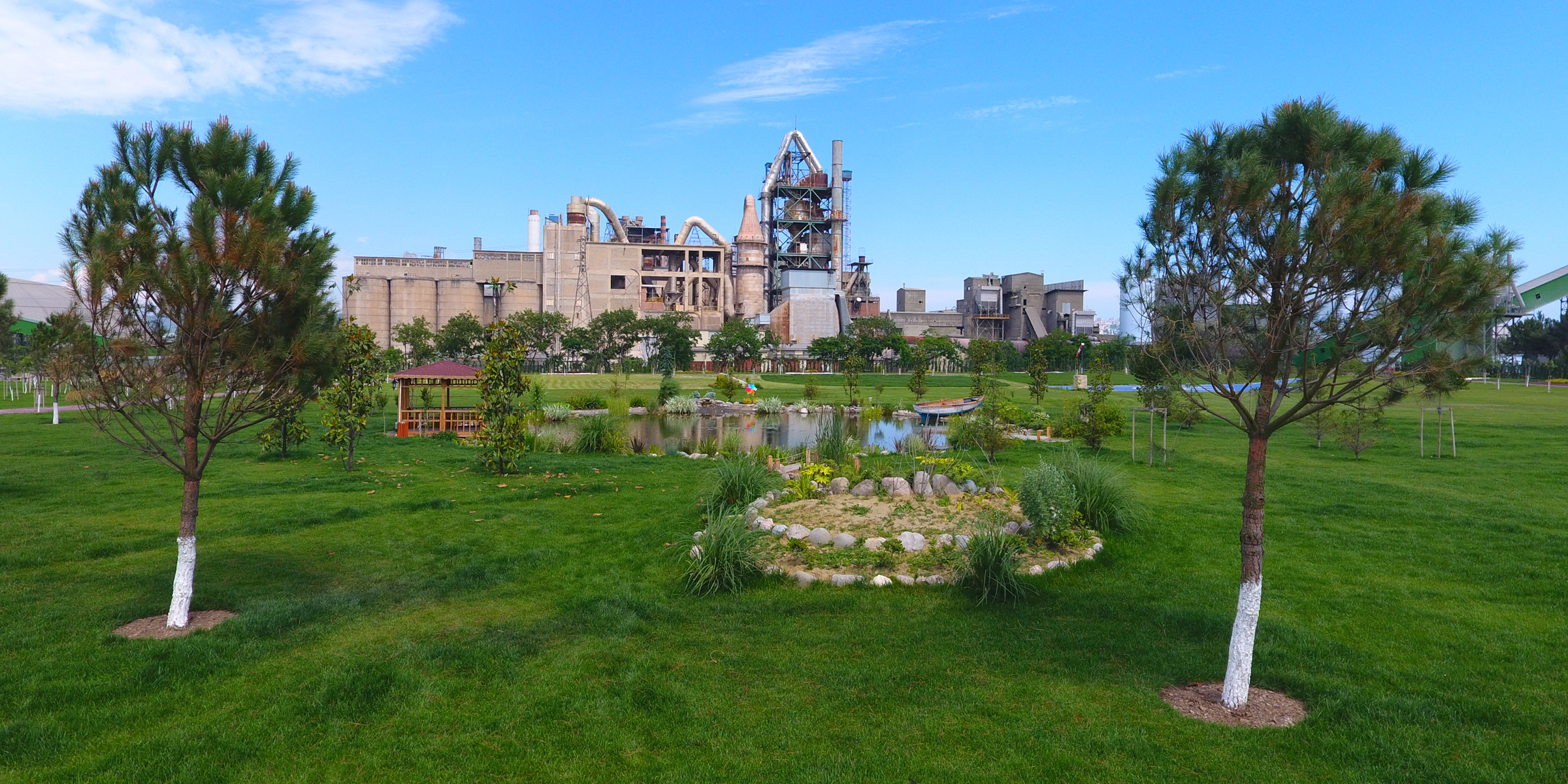
In cement production processes, air emissions represent our main area of environmental impact. Comprehensive policies and technologies are implemented to control dust and pollutant emissions.
In contrast, there are no high-risk processes in terms of water and soil pollution. Approximately 80% of wastewater is domestic in nature. Since industrial water consumption occurs through closed-loop systems, only site waters are discharged. All discharged wastewater is analyzed at two-, three-, and four-month intervals.
We are also considered to be in the low-risk category for soil pollution. Substances of Very High Concern (SVHC) are neither used nor produced in our operations. According to assessments conducted by the Ministry of Environment, Urbanization and Climate Change, all our locations are classified as out of scope within the “contaminated sites notification framework”.
Accordingly, our primary pollution management focus is air quality, and we continue to invest in this area as part of our environmental sustainability strategy.